Resources Within the South East Asian Region
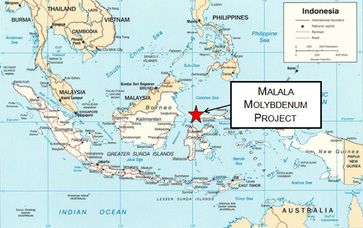
Fig. 1: SEA Resources' Malala Moly Project on the island of Sulawesi, Indonesia. A recent example (2010) of the S-E Asian region's ongoing mining development and exploration.
Image Source |
History Of Mineral Exploration
In search of gold in the East Indies, early Dutch prospectors were the first to come to realise the important association between volcanic island arcs and mineral deposits (Carlile, 1994). However, the history of mineral exploration in South East Asia dates to the early extraction of alluvial gold deposits by around 400 AD (Carlile, 1994). Mineral exploration in the area is currently ongoing. Some companies (like SEA Resources see Fig. 1) have been assessing the region's suitability for the mining of molybdenum, a common byproduct of the extraction of porphyritic copper-gold deposits (SEAR, 2013). |
|
Mineral Deposits
The Southeast Asian region is characterized by highly active plate boundaries, several of which contribute to local mineralizations. Since the local tectonic (i.e. geological) settings vary broadly over the entire South East Asian region, the resources associated to such specific settings will also vary immensely (Peters et al., 2005). The complex zones of collision and subduction along the boundaries of these highly active plates are associated to the generation of both dangerous hazards (earthquakes, volcanoes) as well as to the deposition of valuable resources resulting from the creation of environments suitable for the mineralisation of various ores and base metals (Peters et al., 2005). The main mineral deposits associated to the region are those formed through ancient porphyritic intrusions that developed during the primary collisions of the largest plates of Southeast Asia. Primary minerals extracted from these porphyritic systems include copper, gold and silver. The Grasberg Deposit of Indonesia is the region's largest porphyry-gold mineralization system, and is associated to the igneous arc-volcanism that is the result of the Indo-Australian Plates collision with Sunda (Peters et al., 2005). As mentioned above, the mineral molybdenum (Mo) is often associated to such porphyritic environments and is often mined as a secondary mineral (see Fig. 2). 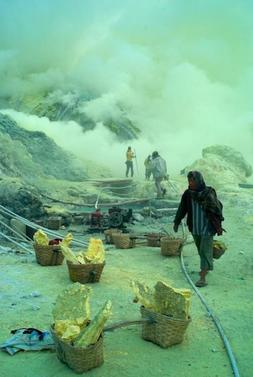
Fig 3.: Men and women extracting sulfur brimstones from the flanks of the Ijen Volcano in Indonesia
Image Source 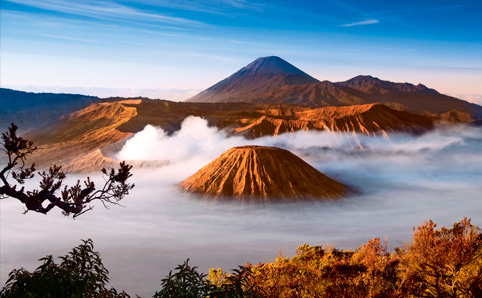
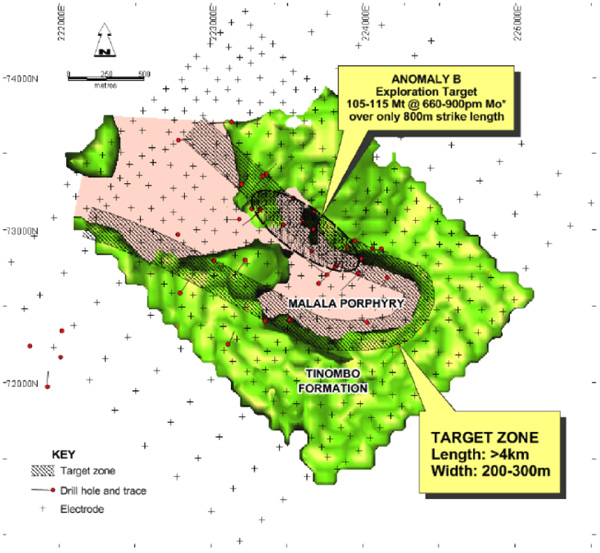
Fig. 4: A view of the summit of Mount Bromo, a favourite destination in Indonesia among mountain hikers.
Image Source |
|
References
Carlilea, J.C. & Mitchell, A. 1994. Magmatic arcs and associated gold and copper mineralization in Indonesia. Journal of Geochemical Exploration, vol. 50, Issues 1–3, 91–142.
Harsaputra, Indra. 2011, December 19th. Kawah Ijen: Between potential & threat.The Jakarta Post, Bondowoso, East Java. The Jakarta Post. Online article accessed Jan 29, 2014. Link to article
Peters, S.G. et al. 2005. Geology and Nonfuel Mineral Deposits of Asia and the Pacific. USGS, US Dept. of Interior. V 1. (Available here)
Pleasance, C. 2014, January 11th. The volcano that spews BLUE lava: Crater shoots out molten sulphur that looks red during the day but changes colour at night. Daily Mail United Kingdom. Mail Online. Online article accessed: Jan. 29 2014. (Here)
Yu.G. Gatinsky, G.L. Vladova. (Date Unknown). Subduction Zones of South East Asia: Main Types, Seismicity and Mineralization. (Link to webpage within the Centre for Information and Archives of Geology Vietnam)
South East Asia Resources. 2013. Company Website: http://www.victorywestmoly.com.au/projects.asp. ABN – 66 009 144 503
Harsaputra, Indra. 2011, December 19th. Kawah Ijen: Between potential & threat.The Jakarta Post, Bondowoso, East Java. The Jakarta Post. Online article accessed Jan 29, 2014. Link to article
Peters, S.G. et al. 2005. Geology and Nonfuel Mineral Deposits of Asia and the Pacific. USGS, US Dept. of Interior. V 1. (Available here)
Pleasance, C. 2014, January 11th. The volcano that spews BLUE lava: Crater shoots out molten sulphur that looks red during the day but changes colour at night. Daily Mail United Kingdom. Mail Online. Online article accessed: Jan. 29 2014. (Here)
Yu.G. Gatinsky, G.L. Vladova. (Date Unknown). Subduction Zones of South East Asia: Main Types, Seismicity and Mineralization. (Link to webpage within the Centre for Information and Archives of Geology Vietnam)
South East Asia Resources. 2013. Company Website: http://www.victorywestmoly.com.au/projects.asp. ABN – 66 009 144 503
Page created by Patrick Lanouette.
